
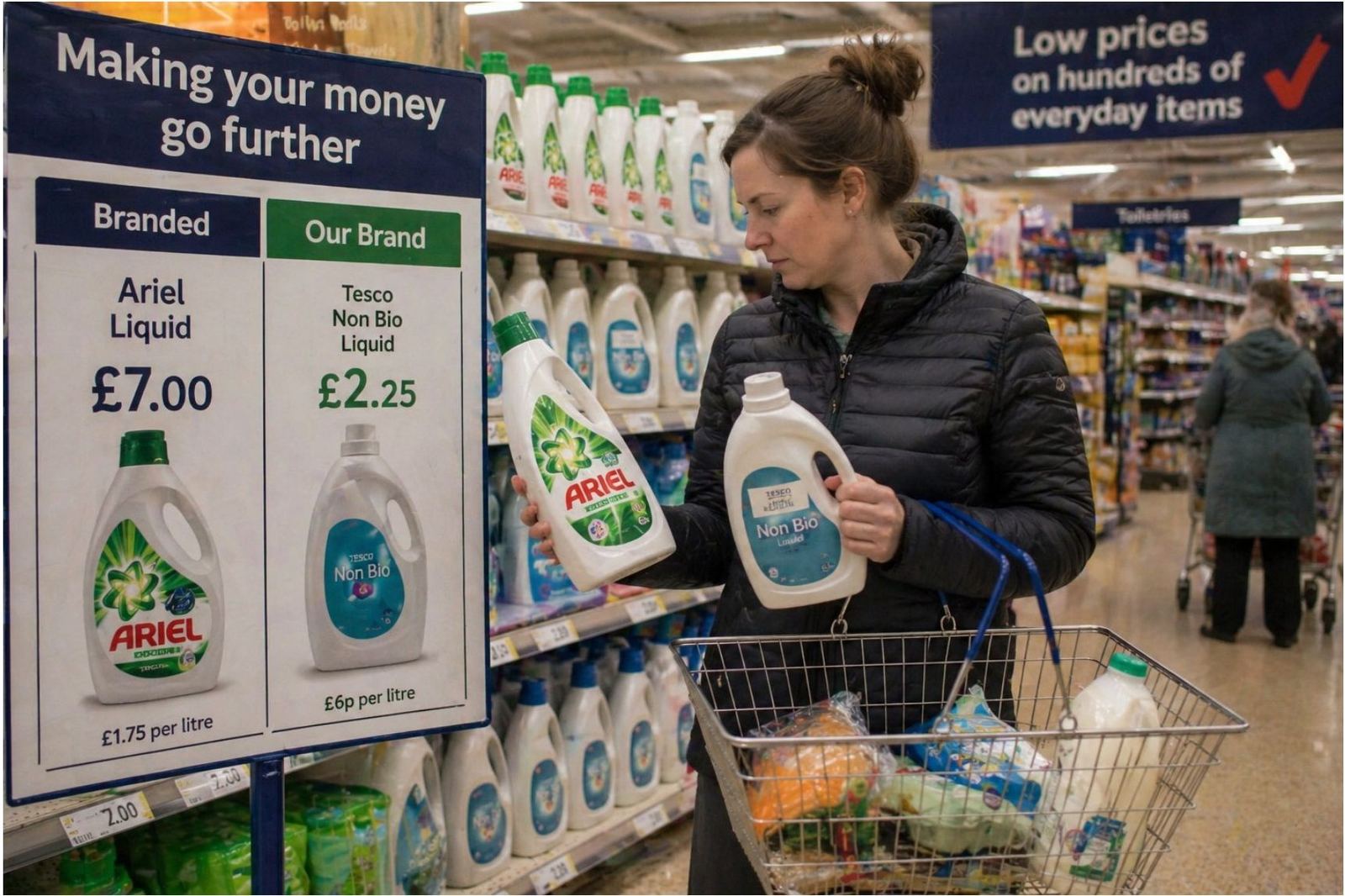
Here is a statistic that should make every commercial leader in consumer goods stop and re-read their last pricing review.
Between 2021 and 2024, prices on the cheapest "value" products in grocery rose 1.3 to 1.9 times faster than premium variants in the same categories.
Read that again. The products bought disproportionately by lower-income households inflated faster than the premium tier most of us assumed was carrying the price load. That phenomenon — "cheapflation" — is one of the clearest signals that something has gone fundamentally wrong with how the industry is pricing.
In the previous article I argued that the cost shocks of 2026 are structural, not transitory. This article goes further: the pricing model most consumer goods businesses built during the pandemic is no longer fit for purpose. It is actively eroding loyalty, hollowing out the middle of the price ladder, and breaking the predictable growth equation that boards in UK&I have relied on for decades.
The good news is that the fix is well-understood. The harder news is that it requires a genuine Revenue Growth Management capability — not a pricing committee with a spreadsheet.
1. What the Pandemic Playbook Actually Did
For most of the last thirty years, consumer packaged goods grew on a predictable formula: modest population gains, steady consumption, and incremental annual price rises of two or three percent. The pandemic broke that equilibrium in three stages.
First came the supply shock and surging demand. Input costs jumped, shelves emptied, and rapid — often drastic — price increases were genuinely justified. So far, so understandable.
Second, those high prices stuck. Long after the original cost pressure eased, headline price points stayed elevated. In some categories they continued climbing. The pricing reset that consumers expected never arrived.
Third, and this is where the damage compounded, the increases were not evenly distributed. They concentrated at the value end — the very tier that lower-income households cannot trade down from. The result is a market that now looks structurally different from the one boards built their plans around.
The shattering of brand loyalty
Roughly 75% of consumers tried new shopping behaviours during the pandemic, and around 39% — mostly Gen Z and Millennials — actively deserted trusted brands for more affordable or value-aligned alternatives. Once a shopper crosses over to private label or a challenger brand and discovers parity, the cost of winning them back is several times higher than the cost of keeping them was.
Cheapflation and the squeezed bottom
The 1.3 to 1.9 times faster inflation on value products did more than burden lower-income households. It compressed price dispersion across the category — the gap between value and premium narrowed, making the premium tier suddenly look much less premium. That is one of the reasons trade-down has been so persistent.
The broken growth equation
Reliable 4% annual growth is no longer a given in most categories. Pricing has plateaued or reversed in several. Volumes are volatile as shoppers continue to trade across tiers and channels. The boards still planning around the old formula are setting targets their commercial teams cannot hit.
Consumer resentment as a P&L item
Sudden hikes without perceived justification have triggered something that did not exist as a measurable variable five years ago: active brand avoidance. Consumers are not just switching on price — they are switching out of a sense of unfairness. That emotional layer makes recovery slower and more expensive than a normal volume dip.
2. Why "Just Lower Prices" Is Not the Answer
The instinctive response to a loyalty and trade-down problem is to roll prices back. Almost every commercial leader I speak to has had this conversation with their CEO at least once in the past twelve months.
It does not work, for three reasons.
Headline price reductions are read by retailers and consumers as a signal that the previous price was wrong, which damages future pricing power. They are also extraordinarily expensive at scale: a 5% across-the-board reduction can wipe out a year of margin recovery in a single quarter. And critically, they do not address the underlying issue, which is not that prices are too high in absolute terms but that the architecture of the portfolio no longer matches how shoppers actually buy.
The pricing problem is not really a pricing problem. It is a portfolio architecture problem dressed up as one.
This is where Revenue Growth Management earns its place at the centre of the commercial agenda.
3. The RGM Cure: Five Levers, Worked in Sequence
Revenue Growth Management is the discipline of driving sustainable growth by working five interlocking levers — pricing, promotions, assortment, trade terms, and mix — in coordination rather than in isolation. The brands recovering fastest from the pandemic pricing hangover are working all five together.
Lever 1: Redesign Pack-Price Architecture
Waiting for inflation to "reset" is not a strategy. The portfolio needs to be redesigned around how shoppers buy now — not how they bought in 2019.
- Affordability plays. Introduce entry-level packs with lower out-of-pocket cost, even where the per-unit price is technically higher. This protects the budget-conscious shopper who cannot stretch to the larger format.
- Value-up solutions. Offer larger "stock-up" formats for households that have the cashflow to pay more upfront in exchange for a lower price-per-unit. This is where most of the trade-up margin is currently sitting.
- De-averaged assortment. Tailor SKUs and price points to channel. Convenience is not a smaller version of grocery; e-commerce is not a digital version of either. The companies still pricing one assortment across all channels are leaving margin on the table in every one of them.
Lever 2: Trade Promotion Optimisation
The "spray and pray" promotion era is over. In our experience, a meaningful share of historical trade spend in UK&I consumer goods businesses is destroying value rather than creating it — and most companies cannot tell you with any confidence which slice.
- ROI-driven spending. Use AI and advanced analytics to separate promotions that drive genuine incremental volume from those that simply subsidise purchases that would have happened anyway. The latter are not promotions; they are a hidden discount on your base business.
- Targeted loyalty design. Build campaigns around specific shopper segments and missions, balancing immediate value delivery with long-term brand equity. Blanket promotions train shoppers to wait.
Lever 3: Transition from Volume to Value
The most successful post-pandemic brands have shifted their internal mindset from chasing volume at all costs to actively protecting value and margin.
- Willingness-to-pay analysis. Track shopper price sensitivity in close to real time, by category and occasion. The same shopper will accept very different prices on a Tuesday lunchtime sandwich versus a Friday night meal-for-two — and the data to model this exists.
- Mix management as a growth lever. Since volume is volatile, much of the available growth has to come from guiding shoppers toward more profitable combinations or higher-tier items where the occasion allows. This is where category vision and execution discipline matter more than headline pricing.
Lever 4: Build Digital "Watchtowers"
Stability is not coming back any time soon, which means the operating model has to be agile by design rather than agile by exception.
- Real-time monitoring. Dashboards that track competitor moves, retail panel data, and digital shelf signals daily — not monthly — so that pricing and promotional responses are measured in days rather than quarters.
- Cross-functional integration. Sales, marketing, and finance need to be looking at the same numbers and making decisions together. The companies still running pricing through a quarterly committee that meets after the quarter has closed are losing ground every cycle.
Lever 5: Tie It All Together with Strategic Pricing Discipline
Underneath all four levers above sits a fifth, harder discipline: pricing has to move from cost-plus thinking to value-based thinking. That means understanding what each shopper, each channel, and each occasion is genuinely willing to pay — and pricing to that, rather than to your last factory cost plus a target margin.
4. What This Means for UK&I Mid-Market Manufacturers
The five-lever framework is not the exclusive preserve of multinationals with dedicated RGM teams of fifty. In our work with UK&I mid-market consumer goods businesses (typically in the £50m to £1bn revenue range), the most consistent pattern is this:
Most mid-market manufacturers are working two of the five RGM levers reasonably well — usually pricing and promotions. The other three are sitting on the table, unworked, and that is where the largest unclaimed margin lives.
In practical terms, the highest-value diagnostic questions for any UK&I commercial leader to put in front of their team this quarter are:
- What proportion of our trade spend can we actually defend on incremental ROI — with evidence, not assumption?
- How well does our pack-price architecture map to the way our shoppers actually buy across grocery, convenience, and e-commerce in 2026 — not 2019?
- Are sales, marketing, and finance making pricing decisions from the same data, on the same cadence, against the same P&L?
- When was the last time we removed a margin-dilutive SKU because the data demanded it, rather than kept it because a key account asked us to?
If those questions produce uncomfortable silences in the room, that is the signal. The companies that are pulling ahead in UK&I right now are not the ones with the biggest commercial teams, they are the ones who have stopped negotiating with the old playbook and started building the new one, lever by lever.
Let's Talk
The pandemic-era pricing fever has left the consumer goods industry with a loyalty crisis and a broken growth model. Lowering headline prices will not fix it. What is needed is a holistic Revenue Growth Management transformation — the right product, at the right price, in the right channel, to the right shopper, executed in coordination.
At Chase Retail & Consumer Goods we work with UK&I consumer goods leadership teams to translate exactly this kind of macro shift into specific, sequenced commercial actions: from RGM diagnostics, to pack-price architecture redesign, to trade promotion optimisation, to integrated planning transformation. Every business has its own pressure points, its own legacy constraints, and its own unfair advantages to build on.
I am open to discussing further with you your specific and unique requirements. If you would like a confidential, no-obligation conversation about where the largest unclaimed RGM levers are sitting in your business — and how to sequence the work — please reach out directly via LinkedIn or via Chase Retail & Consumer Goods.